Sispany: A Sophisticated Display Font for Modern Design
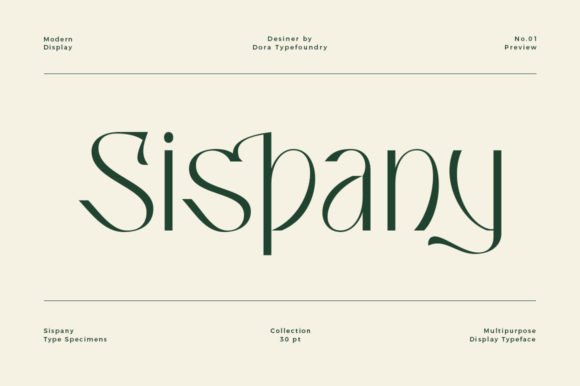
Fonts are more than just a means to display text—they shape the message, evoke emotions, and define the visual tone of any project. Sispany is a sophisticated and elegant display font that stands out with its contemporary design and fresh aesthetic. Whether you're crafting branding materials, designing a website, or preparing a presentation, choosing the right typeface can elevate your work from ordinary to extraordinary. That’s where Sispany shines.
What Makes Sispany Unique?
Sispany blends modern minimalism with refined elegance, making it ideal for high-impact designs. Its clean lines and subtle character variations offer a versatile yet stylish appearance. As a display font, it excels in headlines, logos, posters, and other visuals where attention-grabbing typography is essential. Unlike standard system fonts, Sispany brings personality and professionalism to creative projects.
One standout feature is its PUA encoding, which gives designers easy access to all glyphs and alternate characters. This ensures flexibility when customizing text without compromising legibility or style. Whether you’re working on a logo for a startup or a headline for a blog post, Sispany allows for nuanced typographic expression.
Common Mistakes When Choosing and Using Sispany
Many users choose Sispany because of its visual appeal, but overlook how best to integrate it into their projects. Here are some common pitfalls to avoid:
1. Misusing Sispany in Body Text
Sispany is designed primarily for display use. Attempting to use it as body copy in long paragraphs often results in poor readability. The font’s unique features—like thick strokes and stylized serifs—are meant to catch the eye, not to be read at length.
Better Approach: Reserve Sispany for headings, titles, or short phrases. Pair it with a more legible sans-serif or serif font for body content. For example, using Sispany for a product title and a clean font like Lato or Open Sans for the description creates a balanced and professional layout.2. Ignoring Color and Contrast Considerations
A font’s beauty is only fully realized when paired with the right colors and background. Some users apply Sispany without considering contrast, leading to text that fades into the background or becomes visually overwhelming.
Better Approach: Always test Sispany against different color schemes and backgrounds before finalizing a design. Darker shades like navy blue or deep emerald green often complement its lighter tones, while high-contrast combinations (e.g., black text on white) ensure maximum clarity.3. Overlooking Licensing and Usage Rights
Before downloading or purchasing Sispany, it's crucial to understand its licensing terms. Many users assume that once they’ve bought a font, they can use it anywhere—online, print, client work—without restrictions. However, this isn’t always the case.
Better Approach: Check the font’s license agreement carefully. If you plan to use Sispany in commercial projects or distribute it to clients, ensure the license covers those uses. Avoid sharing the font file beyond what’s permitted to prevent legal issues down the line.How to Maximize the Potential of Sispany
To truly harness the power of Sispany, consider these practical tips that will help you make the most of its features while avoiding missteps:
- Use it sparingly: Apply Sispany in strategic places to maintain hierarchy and focus. Too much bold typography can dilute the impact of important messages.
- Experiment with spacing: Kerning and tracking adjustments can significantly enhance the look of Sispany. Tighten spacing slightly for logos to create a cohesive feel, or increase it for headings to emphasize each word.
- Explore alternates: Thanks to its PUA encoding, Sispany offers multiple glyph options. Try swapping letters or using ligatures to add a touch of sophistication to your designs.
- Pair it thoughtfully: Complementary fonts can balance Sispany’s boldness. Look for neutral, minimalist fonts in the same family or contrasting styles that don’t compete for attention.
Real-World Examples of Effective Sispany Use
Imagine you’re creating a landing page for a new fashion brand. Using Sispany for the headline “Discover Timeless Style” instantly conveys class and modernity. Then, switch to a sleek sans-serif like Montserrat for the rest of the page to keep the user experience smooth and readable.
Or consider a boutique coffee shop launching a new seasonal menu. Sispany works beautifully for the header “Fall Brews,” drawing attention with its refined curves. Below it, a simple Roboto or Raleway would serve well for listing items and prices, ensuring clarity without losing the overall aesthetic harmony.
Things to Check Before Committing to Sispany
Before incorporating Sispany into your workflow, take a moment to evaluate the following factors:
- Legibility at Different Sizes: Test how Sispany looks at various sizes, especially if you're using it on websites or mobile interfaces. It should remain clear and impactful even at smaller dimensions.
- Compatibility Across Platforms: Ensure Sispany works seamlessly on the software and platforms you use regularly. Most modern design tools support PUA-encoded fonts, but double-check for any potential conflicts.
- Scalability for Print and Digital Media: While Sispany is excellent for digital displays, it also holds up well in print. However, always preview the font in both formats to confirm its performance across mediums.
- Cost vs. Value: Evaluate whether the price of Sispany aligns with the benefits it brings to your specific projects. Sometimes a free alternative may suffice for non-commercial use, but for professional branding, investing in a premium font like Sispany makes sense.
When Not to Choose Sispany
While Sispany is a powerful tool, it isn't suitable for every scenario. If your project requires high readability over large blocks of text, such as an e-book or academic paper, Sispany won’t be the best fit. Similarly, in environments where screen resolution is low or inconsistent, like certain mobile apps or email templates, the font might not render clearly.
Also, avoid using Sispany if your audience includes individuals who may struggle with complex typography due to visual impairments. In such cases, prioritize accessibility by opting for simpler, more universally legible fonts.
Final Thoughts on Making Smart Typography Choices
Choosing a font like Sispany involves more than just picking something that looks good. It requires understanding its purpose, limitations, and the context in which it will be used. By avoiding common mistakes and leveraging its strengths, you can transform your designs into visually compelling and effective communication tools.
Take time to explore the font’s full capabilities—especially the alternates and glyphs enabled through PUA encoding. With careful consideration and thoughtful application, Sispany can become a cornerstone of your design toolkit, helping you stand out in a crowded digital landscape.